
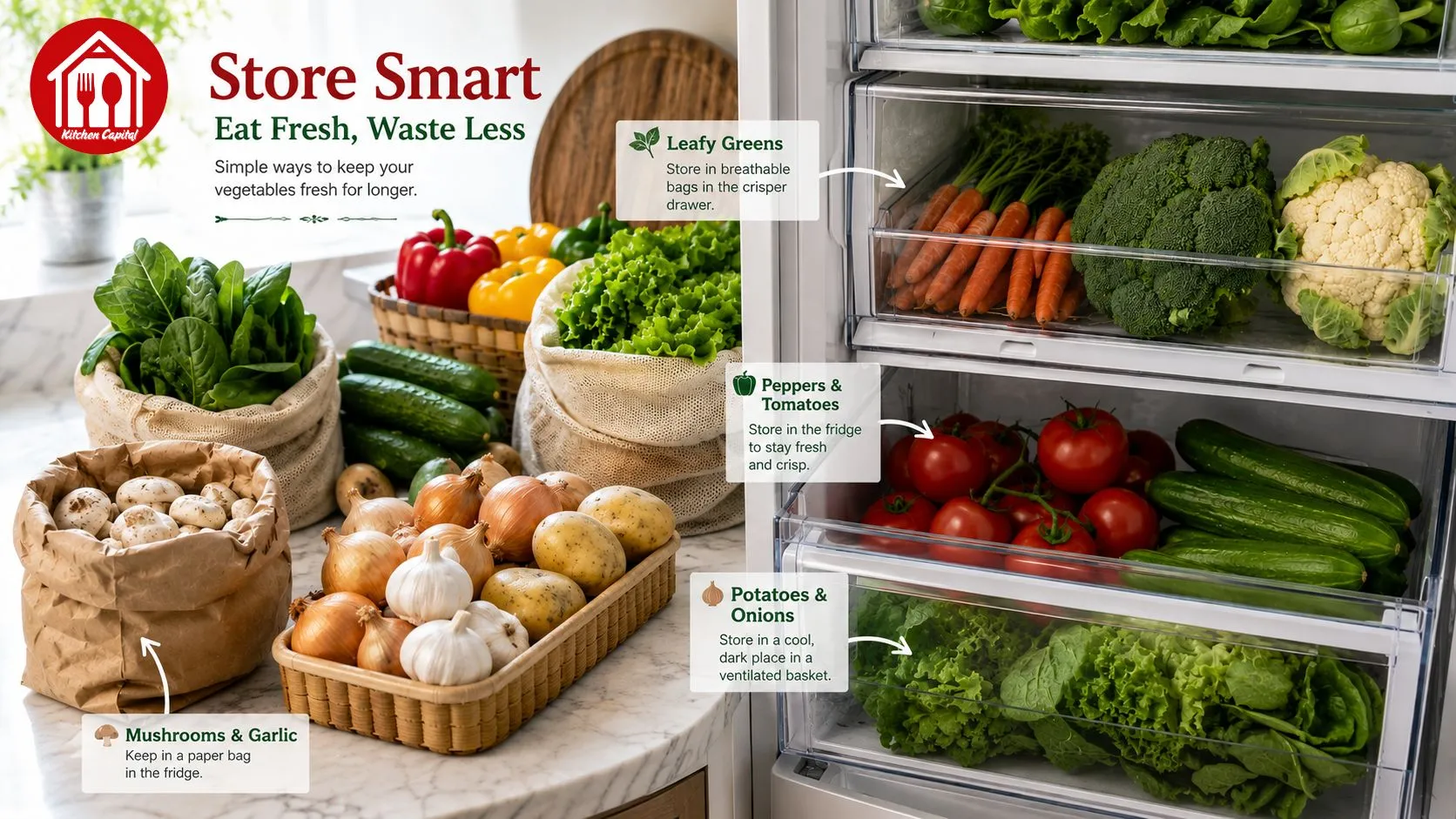
Buying fresh vegetables is easy. Keeping them fresh for more than a few days is where things can get difficult.
You bring home a bag of vegetables from the market, put everything in the refrigerator, and forget about it. A few days later, the spinach has gone soft, the carrots look dry, and the tomatoes are starting to spoil.
The good news is that you do not need an expensive refrigerator or special equipment to solve this problem. A few simple storage habits can make a big difference.
In this guide, you will learn how to store vegetables so they last longer, which vegetables should stay in the refrigerator, which ones should stay outside, and what mistakes can make fresh produce spoil faster.
Quick Tip: Do not store every vegetable in the same way. Different vegetables need different temperatures, moisture levels, and amounts of airflow.
Why Do Vegetables Spoil So Quickly?
Vegetables are still living plant foods after you bring them home. They continue to lose moisture and change over time.
Too much moisture can encourage mold and decay, while too little moisture can make vegetables dry, limp, or wrinkled.
Temperature also matters. Some vegetables stay fresh in the refrigerator, while others can lose quality when they become too cold.
Another factor is ethylene gas. Some fruits and vegetables naturally release ethylene, which can speed up ripening and deterioration in nearby produce.
That is why how to store vegetables so they last longer is not about using one storage method for everything. It is about giving each vegetable the conditions it needs.
1. Do Not Wash Vegetables Before Storing Them
One of the easiest mistakes to avoid is washing vegetables as soon as you get home.
It may seem convenient to wash everything before putting it away, but extra moisture can encourage spoilage for many vegetables.
Instead, keep most vegetables dry and wash them shortly before you are ready to use them.
If a vegetable is already wet, gently dry it with a clean kitchen towel or paper towel before storing it.
What About Leafy Greens?
Leafy greens need a little more attention because they can lose moisture quickly.
Remove damaged leaves and gently dry the greens. Then store them in a breathable bag or container with a clean paper towel.
The paper towel can absorb extra moisture and help prevent the greens from becoming slimy.
Do not pack leafy greens too tightly. A little airflow can help them stay fresh.
2. Store Leafy Greens in the Refrigerator
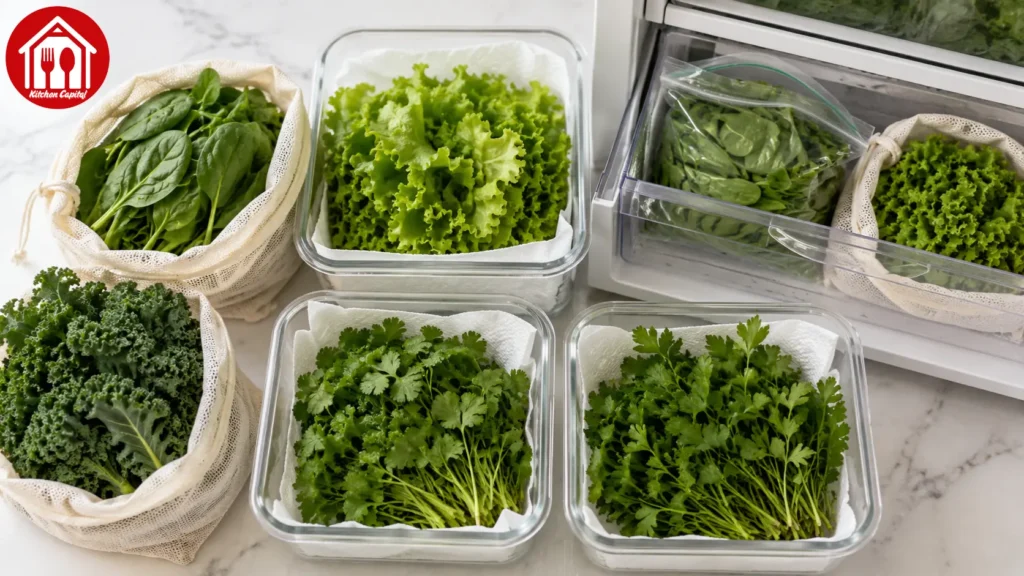
Spinach, lettuce, kale, coriander, parsley, and similar leafy vegetables generally do best in the refrigerator.
The main problem is finding the right balance of moisture.
Too much moisture can make greens slimy. Too little moisture can make them limp and dry.
Place dry leafy greens in a breathable bag or container and add a clean paper towel. Replace the paper towel if it becomes very wet.
This simple method can help you keep vegetables fresh longer without buying expensive storage products.
3. Keep Carrots, Broccoli, and Cauliflower Cold
Carrots, broccoli, and cauliflower generally benefit from refrigerator storage.
If your carrots still have green tops attached, remove the tops before storing them. The greens can pull moisture from the carrots and make them lose their crisp texture.
Store carrots in a bag or container in the refrigerator.
Broccoli and cauliflower can also be refrigerated. Avoid keeping them in an environment that is constantly wet. If condensation builds up inside the bag, remove the excess moisture.
If you are wondering how to store vegetables in the fridge, remember this simple rule:
Cold temperature + controlled moisture + clean storage = better freshness.
4. Potatoes Should Usually Stay Out of the Refrigerator
Potatoes are one of the vegetables that people often store incorrectly.
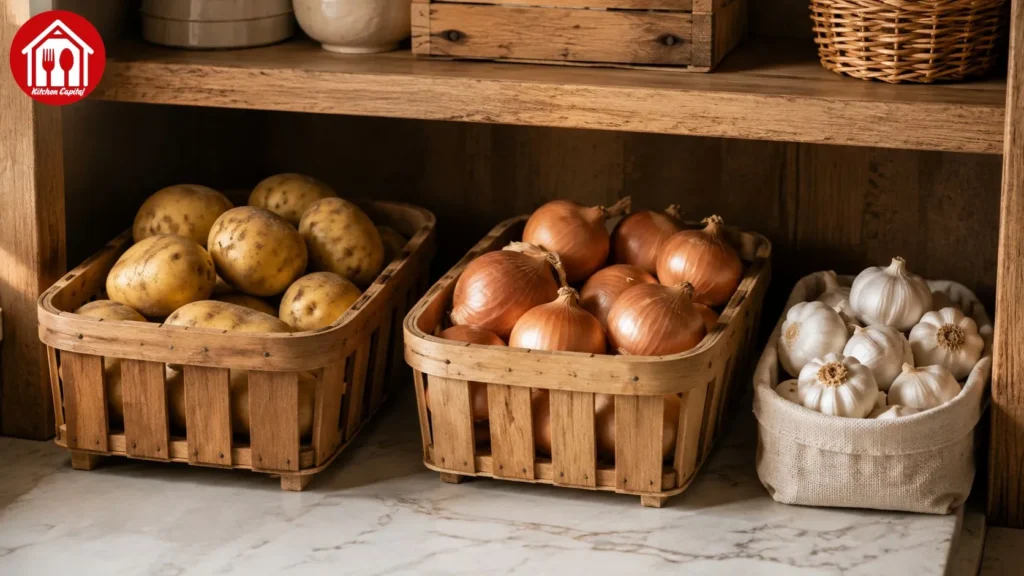
For everyday home storage, keep potatoes in a cool, dry, dark place with good airflow instead of putting them in the refrigerator.
Avoid storing potatoes in direct sunlight or in a tightly sealed plastic bag.
A ventilated basket, paper bag, or breathable storage container can work well.
Also, avoid keeping potatoes in a warm and humid place. Heat and moisture can speed up deterioration.
5. Store Onions in a Dry, Ventilated Place
Whole dry onions usually prefer a cool, dry, well ventilated place.
Keep them away from areas with high humidity.
Do not pile onions together in a way that traps moisture.
It is also a good idea to keep dry onions away from potatoes when possible. They have different storage needs, and separating them can help both stay in better condition.
Once an onion has been cut, place the remaining portion in a clean covered container and refrigerate it.
6. What Is the Best Way to Store Tomatoes?
Whole tomatoes are often best kept at room temperature until they reach the ripeness you want.
Keep them away from direct sunlight and excessive heat.
Once a tomato is cut, refrigerate it in a covered container.
Very ripe tomatoes may also benefit from refrigeration if you need to slow down further softening.
This is a good example of why how to store vegetables so they last longer depends on both the vegetable and its condition.
7. Keep Cucumbers and Bell Peppers Refrigerated
Cucumbers and bell peppers can generally be stored in the refrigerator.
Keep them dry and avoid trapping excess condensation around them.
Bell peppers can be placed in a produce bag or container. Cucumbers should be kept where they will not get crushed by heavier vegetables.
Try not to overload the refrigerator drawer. Good airflow makes it easier to manage moisture and keep produce in better condition.
8. Garlic Needs a Dry Place
Whole garlic does not need to take up space in your refrigerator.
Store whole garlic bulbs in a cool, dry place with good airflow.
A small basket or ventilated container works well.
Once individual cloves are peeled or garlic is cut, refrigeration becomes more appropriate.
The main thing is to avoid storing whole garlic in a damp and closed environment.
9. Mushrooms Need Special Attention
Mushrooms contain a lot of moisture, so their storage method matters.
Avoid keeping fresh mushrooms in a completely airtight plastic container if condensation is building up.
A paper bag can be a practical option because it allows excess moisture to escape.
Do not wash mushrooms until you are ready to use them.
If mushrooms become very slimy, develop an unpleasant smell, or show obvious spoilage, it is better to discard them.
10. Do Not Put Every Vegetable in One Drawer
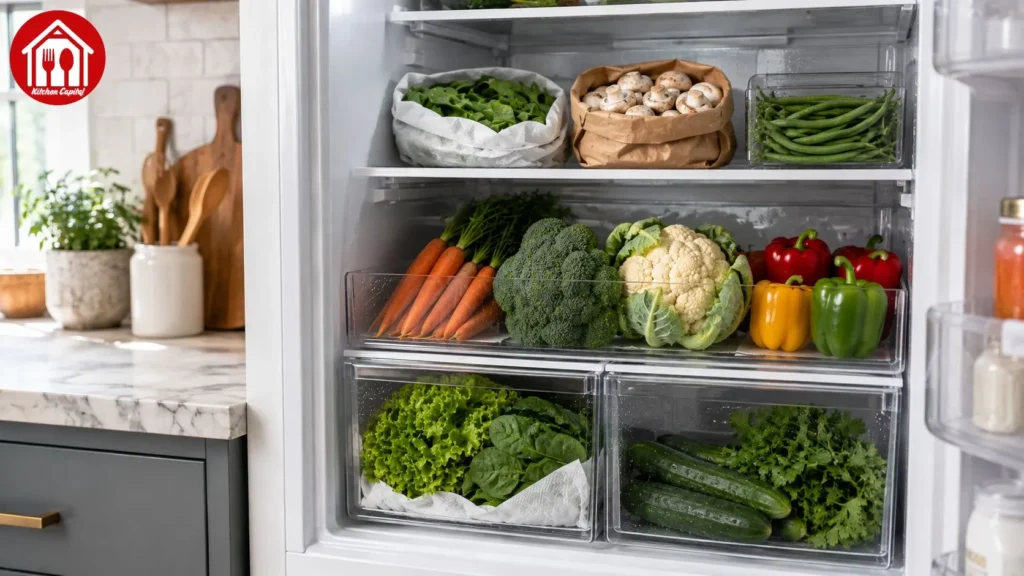
It is tempting to put all vegetables into one refrigerator drawer and forget about them.
However, vegetables have different storage needs.
Usually Refrigerated
- Carrots
- Broccoli
- Cauliflower
- Lettuce
- Spinach
- Bell peppers
- Green beans
- Cucumbers
Usually Stored Outside the Refrigerator
- Potatoes
- Dry onions
- Whole garlic
Depends on Ripeness and Condition
- Tomatoes
- Some squash
- Certain tropical vegetables
The most important thing is to understand that there is no single storage method that works for every vegetable.
11. Keep Fruits and Vegetables Organized
Some fruits and vegetables produce more ethylene gas than others.
Ethylene is a natural plant hormone that can speed up ripening.
You do not need to memorize a complicated chart.
Just avoid packing your refrigerator so tightly that everything touches everything else.
Keeping fruits and vegetables separated when practical can help reduce unwanted changes in nearby produce.
Good organization also makes it easier to see what you already have. This can prevent vegetables from being forgotten at the back of the refrigerator.
12. Store Cut Vegetables Differently
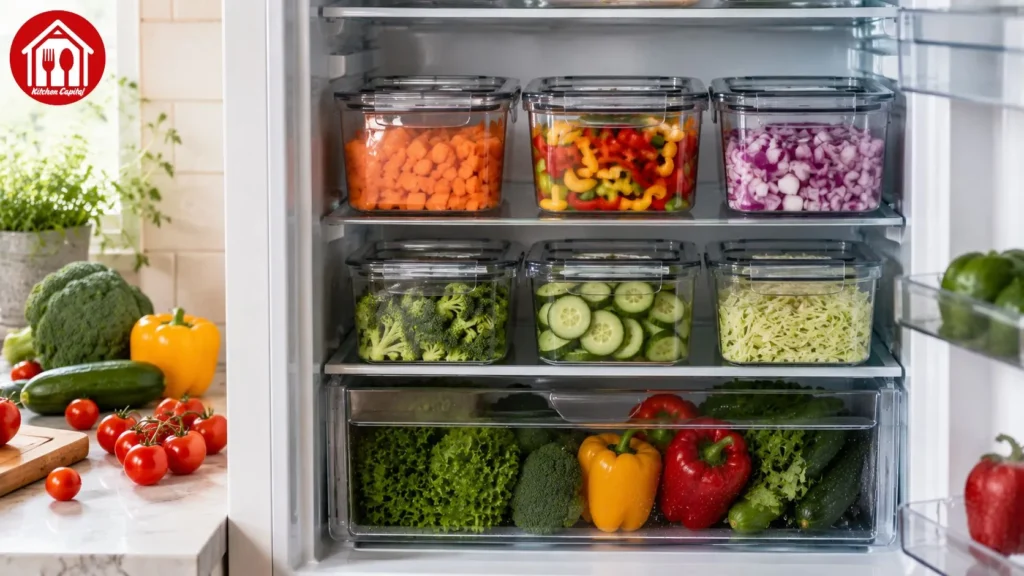
Once you cut a vegetable, its storage needs change.
Cut vegetables have more exposed surface area and should be refrigerated promptly in a clean, covered container.
Examples include:
- Chopped carrots
- Sliced bell peppers
- Cut broccoli
- Diced onions
- Cut cucumber
- Chopped cabbage
Do not leave cut vegetables sitting at room temperature for long periods.
A clean container with a secure lid can help protect the vegetables from moisture, odors, and contamination.
Simple Vegetable Storage Cheat Sheet
| Vegetable | Best Storage |
|---|---|
| Potatoes | Cool, dry, dark place |
| Dry onions | Cool, dry, ventilated place |
| Garlic | Cool, dry place |
| Carrots | Refrigerator |
| Broccoli | Refrigerator |
| Cauliflower | Refrigerator |
| Spinach | Refrigerator with controlled moisture |
| Lettuce | Refrigerator with paper towel |
| Bell peppers | Refrigerator |
| Cucumbers | Refrigerator |
| Mushrooms | Refrigerator, preferably in a paper bag |
| Tomatoes | Counter until ripe, then refrigerate when needed |
| Cut vegetables | Covered container in refrigerator |
Storage time can vary depending on how fresh the vegetables were when purchased, their temperature, humidity, and how they were handled.
Common Vegetable Storage Mistakes
Mistake 1: Washing Everything Immediately
Extra water can increase spoilage for many vegetables.
Mistake 2: Keeping Potatoes in the Refrigerator
For normal home storage, potatoes generally do better in a cool, dry, dark place.
Mistake 3: Using Airtight Bags for Everything
Some vegetables need airflow. Trapped moisture can lead to faster deterioration.
Mistake 4: Overfilling the Refrigerator
A crowded refrigerator makes it harder to organize produce and manage airflow.
Mistake 5: Ignoring Spoiled Vegetables
Check your vegetable drawer regularly and remove vegetables that are clearly spoiled.
A Simple 5 Minute Vegetable Storage Routine
You do not need to spend an hour organizing your refrigerator every time you buy groceries.
Try this simple routine:
Step 1: Remove damaged or spoiled pieces.
Step 2: Do not wash most vegetables before storage.
Step 3: Separate vegetables that need refrigeration from those that do not.
Step 4: Dry excess moisture.
Step 5: Add paper towels to leafy greens when needed.
Step 6: Store cut vegetables in clean, covered containers.
Step 7: Check the vegetable drawer every few days.
This small routine can help reduce food waste, save money, and make your vegetables easier to use throughout the week.
Final Thoughts
Learning how to store vegetables so they last longer does not require complicated equipment.
The biggest improvement usually comes from understanding what each vegetable needs.
Keep potatoes and dry onions in a cool, dry place. Keep leafy greens, carrots, broccoli, and similar vegetables refrigerated. Control excess moisture, avoid washing everything before storage, and refrigerate cut vegetables promptly.
Most importantly, do not treat every vegetable the same.
A few minutes of organization after grocery shopping can help you waste less food, save money, and enjoy better quality vegetables throughout the week.
Save this guide for your next grocery trip. Your future vegetable drawer will thank you.