
The first time you cook a real meal on your own, the kitchen feels bigger than it should. The pan is hot. The recipe is talking about medium heat and minced garlic. And somewhere behind you, something is already starting to smell like it is burning. If that is you right now, take a breath. Every good cook has stood exactly where you are standing.
Cooking is not a talent you are born with. It is a small set of habits, repeated until they feel normal. Learn these basics and you can walk into almost any recipe without fear. Here is what I wish someone had told me on my first day at the stove.
Read the whole recipe before you touch anything
This sounds too simple to matter. It matters more than anything else on this list.
Picture this. You are halfway through a dish, feeling good about yourself, and then the recipe casually says add the marinated chicken. Marinated. For two hours. Nobody warned you at the top. Now dinner is late and your good mood is gone.
So read the recipe from start to finish first. All of it. You will catch the surprises before they catch you: the resting time, the ingredient you do not actually have, the step that needs a second pan. Two minutes of reading saves you from most kitchen disasters.
Get everything ready before the heat goes on
Chefs have a phrase for this. They call it mise en place, which is just a fancy way of saying everything in its place. It is the real reason cooking shows look so calm while your kitchen feels like a small fire drill.
Before you turn on the stove, chop your vegetables, measure your spices, and line everything up in little bowls or on a plate. Open the jars. Keep it all within reach.
Why does this help so much? Because once the pan is hot, things move fast. Garlic can burn in seconds. If you are still peeling an onion while the oil is smoking, you have already lost. When everything is ready and waiting, you just add, stir, and enjoy the cooking instead of panicking through it.
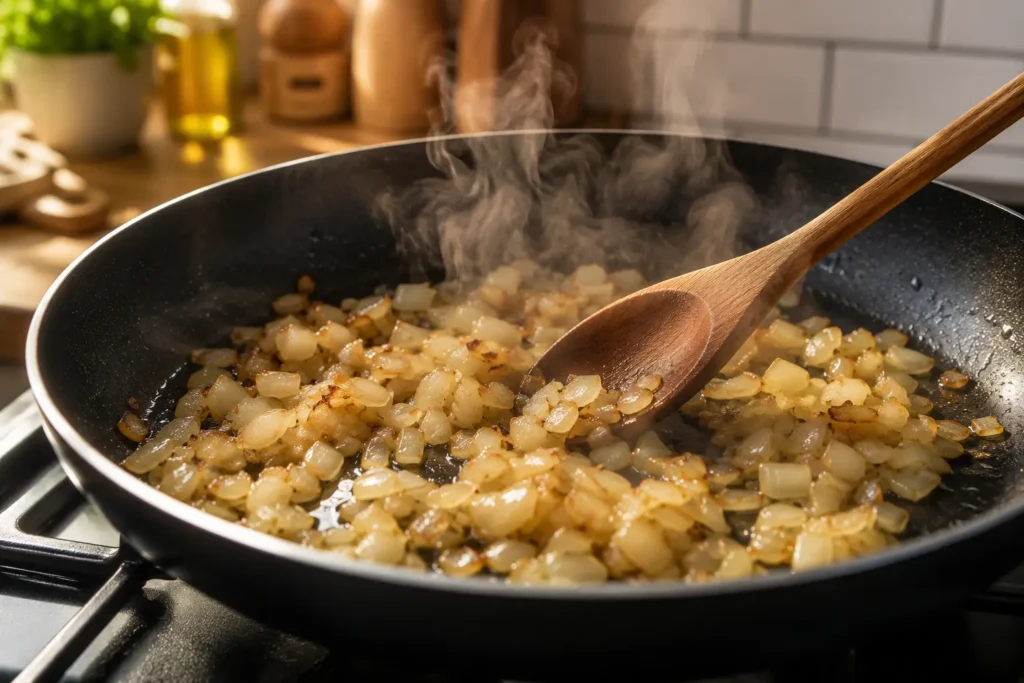
Controlling the heat
Learn to control the heat
Most beginner meals go wrong for one reason. The heat was too high.
We get impatient. We want the food cooked now, so we turn the flame all the way up and walk away. Then the outside burns while the inside stays raw, and we blame the recipe.
Here is the simple version. High heat is for boiling water and searing. Medium heat is where most real cooking happens: frying onions, cooking chicken, building a sauce. Low heat is for gentle jobs, like simmering a curry or melting butter without burning it.
When you are not sure, go lower than you think. A slightly slow dish is easy to fix. A burnt one is not. You can always turn the heat up. You cannot un-burn garlic.
Do not be afraid of oil
Beginners often use too little oil or butter, then wonder why the food sticks, tears, and refuses to brown. Fat carries flavour and stops sticking. You do not need to drown the food, but a proper spoonful of oil in a hot pan is your friend.
Let the oil warm up for a moment before the food goes in. Here is an easy test: drop in one small piece, and if it sizzles gently, the pan is ready. If it just sits there, wait a little longer.
Salt as you go, and taste as you go
New cooks do one of two things with salt. They either forget it completely, or they dump it all in at the end and pray.
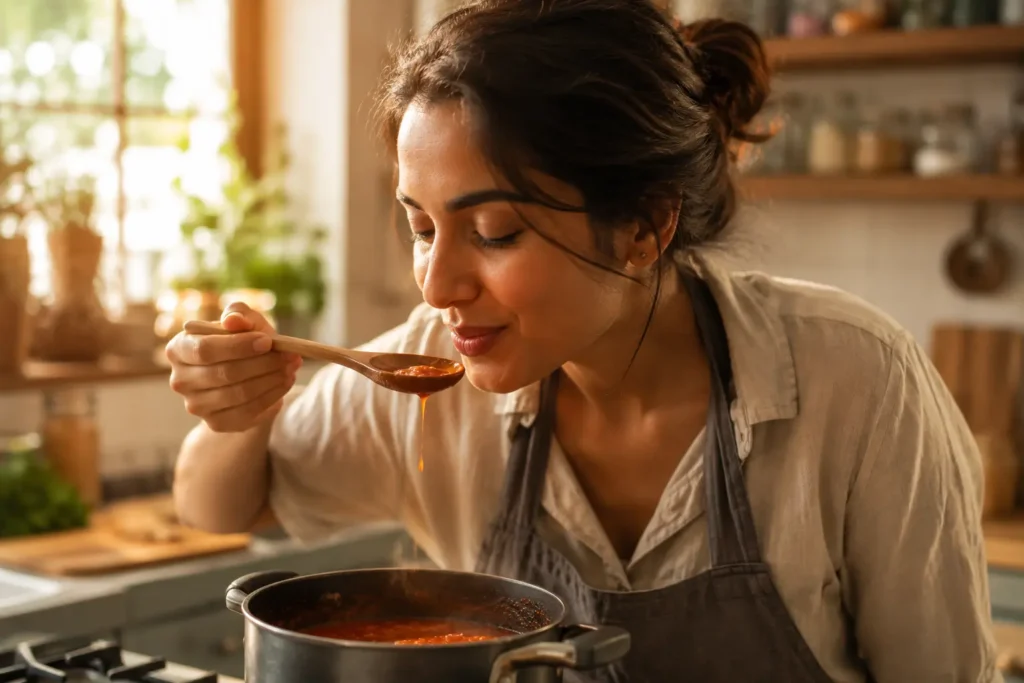
The better way is to add a little salt at different stages and taste while you cook. Salt the water for your pasta. Salt the onions as they fry. Taste the sauce before it reaches the plate. Salt does not only make food salty. In small amounts it wakes up every other flavour and makes a dish taste finished instead of flat.
Keep a spoon nearby and actually taste your food as it cooks. This one habit will teach you more than any recipe ever will. Your tongue is the best tool in the kitchen.
Give the pan some space
When you pile too much food into one pan, it stops frying and starts steaming. Instead of a golden, crispy result, you get a pale and watery one.
The fix is easy. Cook in batches when you need to. Give each piece of chicken or each handful of vegetables a little room to touch the hot surface. It costs you a few extra minutes, but the taste is worth it. A crowded pan is one of the biggest reasons home food does not taste like restaurant food.
Respect the knife, and keep it sharp
A knife scares most beginners, and a blunt one should. It sounds backwards, but a sharp knife is safer than a dull one. A sharp blade goes where you point it. A dull blade slips and goes where it wants.
You do not need a whole set. One good, sharp knife handles almost everything. Learn to hold your food with your fingertips curled under, knuckles facing the blade, so the flat side of the knife guides your cut. Go slow at first. Speed shows up on its own later, without you chasing it.
Do not stress about timing yet
Getting everything ready at the same moment is the hardest part of cooking, and it is the last skill to arrive. Do not expect it on day one, or day thirty.
A simple trick helps. Start with the thing that takes longest, usually the rice or the main dish, then add the quick things later. If your vegetables finish a bit early, that is fine. Warm food that waits a few minutes beats a cold main and a half-raw side.
You only need a few tools
You do not need a kitchen full of gadgets, no matter what the ads tell you. To start, you need one good knife, one cutting board, one frying pan, one pot, a wooden spoon, and something to measure with. That is genuinely enough for hundreds of meals. Buy more only when a recipe keeps asking for a tool you do not have. Skill beats equipment every time. A calm cook with a cheap pan will always win against a nervous one with a fancy kitchen.
Mistakes are the actual lessons
You will burn something. You will over-salt a dish. You will pull something out of the oven that looks nothing like the photo. Every cook alive has done all three, many times over.
The difference between a confident cook and a nervous one is not fewer mistakes. It is caring a little less about them. You taste, you notice what went wrong, you make it again next week, and it is better. That is the whole game.
So start small. Pick one simple dish with three or four ingredients and make it. Then make it again. Cooking is not about being perfect. It is about showing up at the stove, paying attention, and slowly turning I cannot cook into I made this.
A few quick answers
What should a beginner cook first?
Start with something simple and forgiving, like scrambled eggs, a basic stir-fry, or a one-pot rice dish. Three or four ingredients is plenty. Make it a few times before moving on.
What is the most important cooking basic?
Getting everything ready before the heat goes on, and tasting your food as you cook. Those two habits prevent most beginner mistakes.
Why does my food never taste as good as a restaurant’s?
Usually two reasons: not enough salt, and a crowded pan that steams instead of browns. Salt in stages and give your food room in the pan.